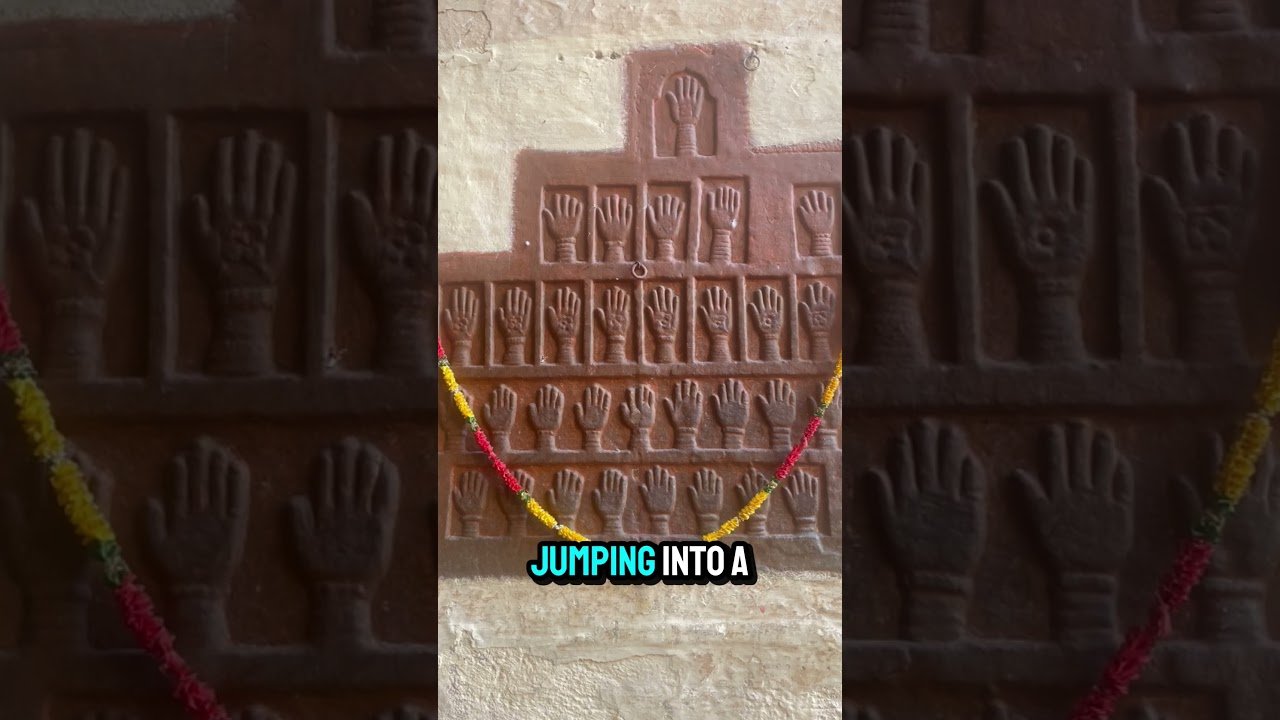
You’re about to embark on a cultural journey that takes you through the intriguing world of Sati memorials in India, as presented by Liisa Ladouceur. Unravel the mysteries behind the red handprints that grace some of the buildings in Rajasthan, and discover the historical practice of “sati,” where royal widows would self-immolate to join their deceased husbands in the afterlife. While the tradition is certainly rooted in romance and loyalty, many would agree that such a drastic act is far from voluntary or enjoyable.
This video by Liisa provides an insightful look into how these handprint memorials serve as a reminder and a tribute to the women who participated in this somber practice. You’ll find yourself questioning and reflecting on the compelling stories captured in the artistry of these ancient markings, and perhaps gain a deeper understanding of this cultural phenomenon. As you watch, prepare to learn and be captivated by these echoes of the past in Rajasthan.
This image is property of i.ytimg.com.
Historical Context of Sati
Origins and Meaning of the Practice
Imagine stepping into a time when traditions and rituals governed daily life, and where the practice of sati emerged as a profound yet controversial cultural ritual. Originally seen as a voluntary and sacred act, sati involved a widow self-immolating on her husband’s funeral pyre to accompany him into the afterlife. This practice’s roots are nebulous, nestled somewhere between historical events and mythological tales, making it both fascinating and tragic in equal measure.
Cultural and Social Influences on Sati
Picture yourself in a society where community influence is paramount, and the opinions of your neighbors could shape your destiny. Sati was influenced by cultural norms that prioritized the afterlife over earthly existence, elevating the widow’s act as one of supreme devotion and purity. Over time, what may have started as a choice morphed into societal expectation, deeply entwined with ideas of honor and familial pride. You can imagine how challenging it would be to navigate such a society if you were a widow facing these expectations.
Role in Society and Religious Beliefs
Religious texts and societal structures often intertwine to create practices that seem unalterable. In the case of sati, religious beliefs played a significant role, as it was considered a pathway to spiritual liberation for both the widow and her deceased husband. The practice provided social standing and was perceived as a purification act, transforming a widow into an eternal goddess. Envision the weight of such beliefs if they were your guiding principles—your actions would be as much for your spiritual future as for those who follow your legacy on Earth.
Sati Practices Through the Ages
Documented Instances in History
If you were to leaf through the pages of history, you’d find numerous accounts of sati, some documented, others shrouded in legend. Historically, it was practiced among the higher echelons of society, particularly among Rajput clans known for their warrior codes. These instances often involve dramatic and solemn ceremonies that can seem almost otherworldly in their intensity and ritual significance.
Legal and Religious Sanctions
Understanding sati is not complete without grappling with the legal and religious frameworks that upheld it. In earlier times, religious authorities sanctioned it, and legal systems often turned a blind eye or, shockingly, provided tacit support. This formidable backing fortified its standing, creating an almost insurmountable challenge for those who opposed it. Imagine striving to change something so deeply embedded in both spiritual and legal codes—it would be akin to questioning the very foundation of your beliefs.
Regional Variations Across India
Travel across India, and you’d encounter distinct variations in the practice of sati, shaped by local customs and beliefs. From the vibrant streets of Rajasthan to the serene landscapes of Bengal, the manifestation of sati differed, often reflecting regional histories and societal structures. Each variation adds layers of complexity, suggesting that while the practice shared a common core, its expressions were multifaceted and locally significant. Your journey across these regions would reveal the diverse interpretations and implementations of this poignant practice.
Controversies and Criticisms
Opposition and Bans Imposed by Authorities
In the annals of social reform, the fight against sati stands as a pivotal chapter. You’d encounter spirited opposition from indigenous reformers and colonial authorities alike, culminating in the British banning the practice in 1829. This ban, however, didn’t erase the deeply ingrained tradition immediately, as local customs and beliefs proved resilient against legal mandates. It was a tense period where moral, cultural, and legal battlegrounds intertwined, challenging you to reflect on the distance between law and lived reality.
Debates in Modern India and Feminist Perspectives
Fast forward to modern India, and you find that sati remains a topic of debate, stirring emotions and discussions, especially within feminist circles. Feminists challenge the patriarchal underpinnings that glorified the practice, advocating for the empowerment of women over the entrapment of anachronistic traditions. The debates encourage you to consider broader social norms and the enduring impact of historical practices on contemporary gender dynamics.
International Reactions and Human Rights Implications
Step onto the global stage, and you’ll notice how sati is perceived as a human rights issue, sparking international outrage and dialogue about the rights of women and cultural heritage. The practice is often cited in discussions about cultural relativism and universal human rights, urging you to reflect on how culture and rights intersect and where lines should be drawn. These discussions highlight the delicate balance between respecting cultural practices and advocating for individual freedoms.
The Significance of Sati Memorials
Iconography and Symbolism
If you were to stand before a sati memorial, the symbolism would not escape you. These memorials are adorned with intricate carvings and red handprints, representing the widow’s last earthly connection. Symbolizing sacrifice, devotion, and societal values, these icons serve as poignant reminders of the lives and stories that shaped them, inviting you to contemplate the narratives and memories they carry.
Locations and Features of Sati Memorials
Travel across India, and you’d discover sati memorials in various forms—from grand architectural structures to modest handprints on walls. Often found near temples or in village centers, these memorials are scattered across Rajasthan and parts of Gujarat, standing as silent witnesses to the bygone rituals they commemorate. As you visit these sites, the stark contrast between the beauty of the art and the somber history they signify is something you cannot overlook.
Memorialization and Public Memory
The presence of sati memorials in public spaces highlights how memories are preserved and passed through generations. These memorials are not merely historical artifacts; they are active participants in the cultural memory, influencing how communities perceive their past and each other. For you, they pose questions about how history is remembered and what stories are perpetuated or erased over time.
Red Handprints: The Mark of Sati
Explanation of Red Handprint Symbolism
Imagine pressing your hand against a wall, leaving a bold red mark. In the context of sati, these handprints serve as potent symbols of farewell and sacrificial devotion, left by the widows before their final act. The handprint is a gesture of both presence and absence—a reminder of the individual lost to a ritual bound by tradition and societal expectation.
Cases and Examples in Rajasthan
In the sun-drenched state of Rajasthan, you find many buildings adorned with these handprints, each telling a story steeped in history and emotion. Take, for example, the Padmini Palace in Chittorgarh, where these imprints offer a silent testament to the valorized, albeit tragic, acts of the past. As you trace these handprints, you feel the weight of the past and the echoes of the personal narratives etched into the walls.
Preservation and Viewpoints of Local Communities
Communities living around these handprints have diverse viewpoints on their preservation and significance. For some, they are essential cultural and historical markers, while others view them through a more critical lens, considering the oppressive aspects of the tradition they represent. Your exploration of these communities reveals varied narratives, reflecting the ongoing dialogue between upholding tradition and embracing progress.
Liisa Ladouceur’s Exploration
Background and Motivation for the Video
Imagine setting off on a journey driven by curiosity and a desire to uncover hidden stories. That’s what led Liisa Ladouceur to explore the topic of sati memorials. Her motivation was rooted in understanding the cultural significance behind the red handprints she encountered in Rajasthan, sparking a broader investigation into the history and meaning of sati—a subject that intrigues and yet disturbs in equal measure.
Journey Through Rajasthan
Accompanying Ladouceur’s journey through Rajasthan, you perceive a landscape alive with history and culture. Her travels took her to iconic sites and small villages alike, each revealing a piece of the sati narrative. Through conversations with locals and visits to notable memorials, Ladouceur pieced together a mosaic of stories, shedding light on a practice that continues to generate profound reflection.
Encounters with Local Historians and Residents
Ladouceur’s journey wasn’t solitary; it was enriched by encounters with historians and local residents who provided invaluable insights and personal stories. These interactions were pivotal, offering diverse perspectives that deepened her understanding of sati. You can almost hear the voices of those she met—a tapestry of wisdom converging to paint a picture of the past that is as multifaceted as it is poignant.
Insights from the Video
Presentation Style and Content
Ladouceur’s video presents the complex history of sati with a thoughtful blend of narrative and visual storytelling. Her style is engaging, inviting you into the conversation, making you not only a viewer but a participant in the exploration. The content is carefully curated, balancing historical analysis with personal anecdotes, creating an experience that is both informative and emotionally resonant.
Use of Interviews and Visuals
Throughout the video, interviews and visuals play a critical role in conveying the depth of the subject matter. Each interview offers a new layer of understanding, providing you with multiple facets of the same story. The visuals—captivating shots of memorials, landscapes, and handprints—augment the narrative, enhancing your connection to the material and adding vividness to the historical recountings.
Reception and Audience Engagement
The engagement with Ladouceur’s video has been notable, resonating with audiences both within India and globally. Viewers are drawn in by the rich storytelling and the delicate handling of a sensitive topic, prompting discussions and reflections. The video serves as a catalyst for dialogue on cultural practices, memory, and gender, fostering a deeper awareness and understanding.
Cultural Reflections and Comparisons
Drawing Parallels with Other Cultural Practices
As you ponder the practice of sati, it’s compelling to draw parallels with other historical and cultural rituals worldwide that, at their core, share elements of sacrifice, devotion, or societal pressure. From Viking ship burials to the historical practice of footbinding in China, each reflects complex relationships between belief systems and individual agency, prompting reflection on how cultures navigate the intersection of tradition and ethics.
Impact on Modern Day Feminist Discourse
Within modern feminist discourse, sati occupies a significant position as a symbol of patriarchal oppression and the struggle for women’s rights. It’s a topic that ignites discussions on historical injustices and the ongoing quest for gender equality, encouraging you to consider how past practices influence current societal norms and the fight for equitable treatment across diverse cultural landscapes.
Heritage Conservation Efforts
In preserving sati memorials, attention turns to broader conversations about heritage conservation and the narratives that these sites carry. The challenge lies in conserving these memorials while sensitively interpreting their history, ensuring they educate and inform without glorifying the practices they represented. This balance prompts you to think about how we honor history without perpetuating its injustices.
Ethical Considerations
Handling Sensitive Historical Subjects
Handling a topic as sensitive as sati requires a thoughtful approach, acknowledging its historical gravity while respecting the people whose stories are entwined within it. This necessitates a deft blending of historical fact and empathic storytelling, ensuring you remain aware of the cultural sensitivities that surround it.
Representation and Agency in Sharing Stories
When sharing stories of practices like sati, you wrestle with issues of representation and agency. Whose voices are heard, and how are they portrayed? Ensuring that narratives are respectful and representative, acknowledging the diversity of perspectives, challenges you to create a discourse that is as inclusive as it is accurate.
Respect for Local Beliefs and Ethics
Respecting local beliefs and ethics is vital in any cultural examination, especially with practices rooted in tradition such as sati. While critical examination is necessary, it’s equally important to engage with local contexts with sensitivity and understanding. As you explore, the balance between critique and respect ensures you honor the communities whose histories you delve into.
Conclusion
Summary of Key Learnings
Reflecting on sati, you’re struck by its complex interplay of cultural, religious, and societal factors. It’s a practice that, while belonging to the past, continues to provoke contemplation and dialogue, revealing much about human behavior, cultural evolution, and the tension between tradition and modernity.
Legacy and Future of Sati Memorials
The legacy of sati memorials is a nuanced one, steeped in history yet relevant in contemporary discussions about memory, ethics, and representation. Their future lies in the delicate balance of preservation and interpretation, ensuring they serve as educational tools rather than relics of oppression.
Reflection on Liisa Ladouceur’s Contribution
Liisa Ladouceur’s thoughtful exploration of sati memorials provides an insightful contribution to understanding and engaging with this complex history. Her work invites you to reflect deeper, opening discussions that transcend cultural boundaries, and encouraging a profound appreciation for the intricate stories woven into our world’s tapestry.